
Neck and shoulder tension can make even ordinary activities uncomfortable. Long hours at a desk, repetitive movements, stress, and poor posture can contribute to tightness across the upper back and shoulders. For some people, that tension becomes a persistent problem that stretching, massage, and other conservative treatments don’t fully resolve.
Botox is widely recognized for softening facial wrinkles, but its ability to temporarily relax muscles has applications beyond cosmetic facial treatments. One increasingly discussed procedure is Trap Tox, which involves injecting botulinum toxin into the trapezius muscles along the neck and upper shoulders.
Trapezius Botox has attracted attention for its potential to reduce muscle bulk, create a more elongated-looking neck, and address certain forms of muscular tension. However, its effectiveness for everyday neck and shoulder discomfort is not well established, and treatment carries risks that deserve careful consideration.
Understanding how Trap Tox works, what it may accomplish, and where its limitations lie can help you determine whether it’s worth discussing with a qualified medical professional.
What Is Trap Tox?
Trap Tox refers to Botox injections administered into the upper trapezius muscles. These large muscles extend from the back of the skull and neck across the shoulders and down the upper back. They play an important role in stabilizing the shoulder blades, supporting neck movement, and helping you raise and rotate your shoulders.
The trapezius muscles are involved in many everyday activities, including lifting objects, maintaining posture, and moving the arms. Because they are frequently engaged, they can also become a source of muscular discomfort.
During Trap Tox treatment, a qualified medical professional injects small amounts of botulinum toxin into selected areas of the upper trapezius muscles. The medication temporarily reduces muscle activity by interfering with the nerve signals responsible for muscle contraction.
Depending on the treatment goals, the resulting relaxation may reduce the prominence of the upper trapezius muscles or potentially affect muscle-related discomfort.
Although Botox is FDA-approved for certain medical conditions involving excessive muscle activity, Trap Tox for cosmetic shoulder contouring or routine neck and shoulder tension is an off-label application. Off-label use means the medication is being used for a purpose that has not received specific FDA approval.
Why Do the Trapezius Muscles Become Tight?
The trapezius muscles support several important movements throughout the day. They help stabilize your shoulders while you type, carry groceries, exercise, and do countless other activities.
When these muscles are repeatedly stressed or remain tense for extended periods, discomfort may develop.
Poor Posture and Desk Work
Spending hours looking down at a phone or leaning toward a computer can increase the workload on the muscles supporting your head and shoulders.
Over time, prolonged static positions and inadequate movement breaks may contribute to fatigue, stiffness, and discomfort throughout the neck and upper back.
Stress and Muscle Guarding
Emotional stress can contribute to involuntary muscle tightening. Many people unconsciously raise their shoulders or tense their neck muscles when feeling anxious or overwhelmed.
This sustained muscle activity may contribute to soreness, headaches, and a feeling of heaviness across the shoulders.
Repetitive Movements and Exercise
Activities involving frequent lifting, overhead movements, or repeated shoulder elevation can place additional demands on the trapezius muscles.
While strengthening these muscles supports healthy movement, excessive loading without adequate recovery may contribute to muscular discomfort.
Underlying Musculoskeletal Conditions
Not all neck and shoulder tension originates in the trapezius muscles. Cervical spine conditions, nerve irritation, shoulder injuries, and other medical concerns can produce similar symptoms.
This distinction matters because Botox cannot correct structural problems, nerve compression, or every cause of muscular discomfort.
A medical evaluation is important before considering injections for persistent neck or shoulder symptoms.
How Does Trapezius Botox Work?
Botox contains a purified form of botulinum toxin type A, a neuromodulator that temporarily blocks the release of acetylcholine, a chemical messenger that tells muscles to contract.
When injected into the trapezius, Botox reduces contraction strength in the treated muscle fibers. This effect develops gradually rather than immediately.
For cosmetic purposes, reducing repeated muscle contractions may eventually decrease the size of an enlarged upper trapezius muscle. For patients experiencing muscle-related tension, reduced activity may also change how the area feels, although it does not guarantee meaningful pain relief.
The treatment does not permanently alter the muscle or address the underlying habits and conditions that may contribute to tension. As the effects of Botox wear off, normal muscle activity gradually returns.
Is Trap Tox the Same as Regular Botox?
Trap Tox uses the same active medication found in traditional Botox treatments. The main differences involve injection location, treatment goals, and the amount of medication required.
Traditional Botox treatments often target smaller facial muscles responsible for expression lines. Trapezius injections involve a much larger muscle group that plays an important role in shoulder movement and stability.
Because of this, Trap Tox requires careful assessment of muscle anatomy, strength, and function. Injection planning must account for the patient’s goals without unnecessarily compromising normal movement.
Can Botox Actually Help With Neck and Shoulder Tension?
Botox may reduce muscle activity associated with certain forms of neck and shoulder discomfort, but research on its effectiveness for routine muscular pain has produced mixed results.
Some smaller studies have reported improvements in muscle-related symptoms following botulinum toxin injections. However, a 2025 systematic review and meta-analysis involving 261 patients found that improvements in neck and shoulder myofascial pain were not clinically meaningful compared with saline injections. The researchers concluded that current evidence does not support routinely recommending botulinum toxin for this type of pain.
This doesn’t mean that every patient will have the same experience. It does mean that trapezius Botox should not be presented as a proven treatment for general neck and shoulder pain.
A medical professional can help determine whether symptoms stem from muscle overactivity or another condition that requires different treatment.
Can Trap Tox Help With Tension Headaches?
Neck and upper-shoulder tightness can sometimes contribute to headaches, particularly when discomfort radiates toward the back of the head.
Because Botox reduces muscle contractions, researchers have explored its potential role in managing certain muscle-related headache symptoms. However, evidence specifically supporting Trap Tox for tension headaches remains limited.
It’s also important to distinguish Trap Tox from FDA-approved Botox treatment for chronic migraine. Chronic migraine treatment follows a specific injection protocol involving several muscle groups, and it is not interchangeable with cosmetic trapezius injections.
Patients experiencing frequent headaches should receive an appropriate medical evaluation before pursuing Botox as a potential treatment.
What Are the Potential Trap Tox Benefits?
Although Trap Tox is frequently discussed for both cosmetic and functional purposes, the strength of evidence varies depending on the desired outcome.
A Slimmer, More Defined Shoulder Contour
One of the most recognizable cosmetic applications of trapezius Botox is reducing the appearance of bulky upper shoulder muscles.
When the upper trapezius is particularly prominent, it can create a fuller transition between the neck and shoulders. Reducing muscle activity may gradually decrease muscle thickness, producing a softer shoulder contour.
This effect has contributed to the popularity of terms such as “Barbie Botox” and “Swan Neck Botox.”
A 2025 systematic review involving 121 cases found promising cosmetic improvements in trapezius contouring, although the authors emphasized the need for larger, higher-quality studies.
A Longer-Looking Neckline
As the upper trapezius becomes less prominent, the visible distance between the neck and shoulders may appear greater.
This can create the impression of a longer, more elongated neckline without surgically changing the neck or shoulder structures.
Results depend heavily on individual anatomy, including natural shoulder width, muscle development, and surrounding tissue distribution.
Potential Reduction in Muscle-Related Tightness
Some patients may experience reduced muscle tightness after trapezius Botox because the injected muscle fibers contract less forcefully.
However, reducing muscle activity does not necessarily eliminate pain. Patients with persistent discomfort may still require physical therapy, ergonomic adjustments, or other medical treatments.
A Nonsurgical Approach to Shoulder Contouring
For patients primarily interested in changing the appearance of their shoulders, Trap Tox offers an injectable option without incisions or general anesthesia.
Appointments are relatively brief, and many patients can return to ordinary activities shortly afterward, depending on their provider’s instructions.
However, nonsurgical does not mean risk-free. The trapezius muscles are essential for normal shoulder function, making appropriate patient selection and injection technique especially important.
Who Is a Good Candidate for Trapezius Botox?
Trap Tox may be considered for adults with prominent upper trapezius muscles who want to explore nonsurgical shoulder contouring.
An appropriate candidate generally has realistic expectations, understands that results are temporary, and does not have a medical condition that would make muscle-weakening injections inappropriate.
During a consultation, the provider should evaluate several factors, including:
- The size and development of the upper trapezius muscles
- Existing shoulder strength and range of motion
- Whether cosmetic concerns are related to muscle bulk or skeletal anatomy
- Any history of neck injuries, muscle weakness, or neurological conditions
- Current medications and previous botulinum toxin treatments
- Whether the patient relies heavily on shoulder strength for work, exercise, or daily activities
People with certain neuromuscular disorders, including myasthenia gravis, may face an increased risk of serious complications. Do not administer Botox at an infected injection site or to someone with a known allergy to its ingredients.
Patients who are pregnant or breastfeeding should discuss the limited safety data with their healthcare provider.
For people seeking relief from chronic pain rather than cosmetic contouring, a comprehensive medical evaluation is particularly important.
What Happens During a Trap Tox Appointment?
Treatment begins with a consultation to discuss your goals, medical history, and whether trapezius Botox is appropriate.
Your provider may ask you to move your shoulders, elevate your arms, or contract your trapezius muscles to assess their size and function.
If treatment is recommended, your provider selects the injection sites and dose based on your individual anatomy.
The Injection Process
During the procedure, we clean the treatment area and use a fine needle to administer Botox into selected portions of the trapezius muscles.
You may feel brief pinching or pressure with each injection. Most appointments are relatively short, although the total visit time depends on the assessment and treatment plan.
At Aesthetics Hawaii, we offer trapezius Botox as a physician-directed treatment in Honolulu.
What to Expect After Treatment
Mild tenderness, bruising, or soreness around the injection sites may occur. Your provider will explain any temporary activity restrictions and when you can resume your usual exercise routine.
Because the trapezius muscles contribute to shoulder stability, patients should watch for unexpected changes in strength or movement.
Report any significant weakness or unusual symptoms to the treating provider promptly.
How Long Does Trap Tox Take to Work?
Botox effects develop gradually as nerve signaling to the treated muscle fibers decreases.
Some patients may notice changes in muscle activity within the first one to two weeks. However, visible cosmetic contouring may take longer because the muscle must gradually shrink.
Trap Tox Results Timeline
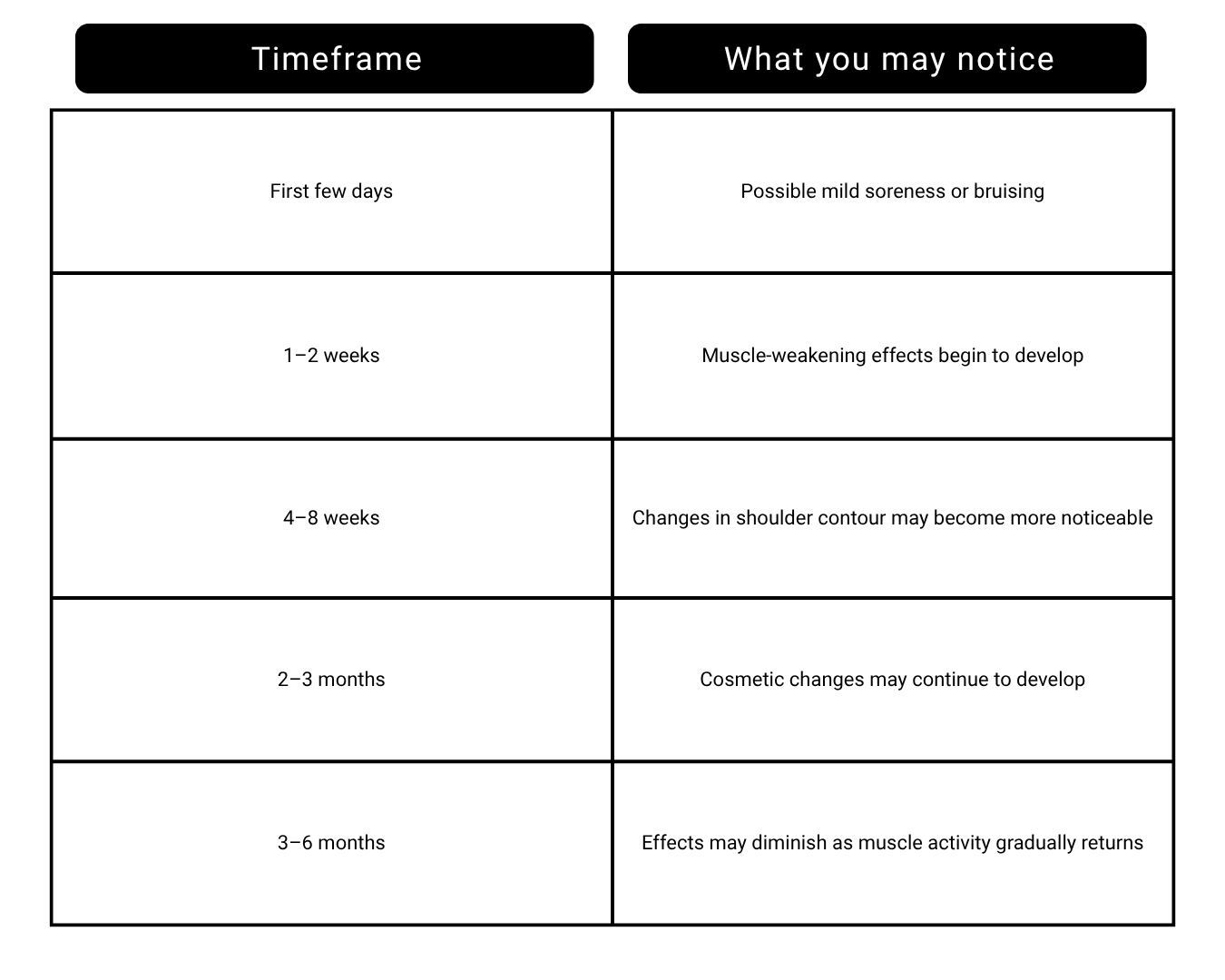
These timeframes are approximate. Results vary with the dose, injection technique, muscle size, and individual response.
How Long Does Trapezius Botox Last?
The muscle-relaxing effects of Botox generally last several months. Cosmetic changes in muscle size may follow a different timeline and can sometimes persist after the initial weakening effect begins to fade.
Maintenance treatment may be considered if the patient is satisfied with the results and has not experienced functional problems.
Repeated treatment should never be automatic. A qualified provider should reassess muscle strength, treatment response, and the continued need for injections before recommending another session.
What Are the Risks and Limitations of Trap Tox?
The trapezius muscles do more than influence shoulder appearance. Unnecessarily weakening them can affect movement, strength, and comfort.
Understanding these risks is essential before undergoing treatment.
Temporary Shoulder Weakness
Because Botox intentionally reduces muscle contractions, weakness is a foreseeable side effect.
Some patients may notice difficulty lifting their shoulders, carrying heavier objects, performing overhead exercises, or maintaining normal shoulder stability.
In the 2025 systematic review of cosmetic trapezius injections, 13 of 121 patients experienced mild, temporary weakness. However, the small sample size means the findings cannot establish the full risk profile of Trap Tox.
Changes in Shoulder Function
Excessive muscle weakening may interfere with normal shoulder blade movement and place additional demands on surrounding muscles.
This is especially relevant for athletes, people who lift weights regularly, and individuals whose occupations involve repetitive overhead activity.
A slimmer shoulder appearance should never come at the expense of essential muscle function.
Uneven or Unsatisfactory Results
Muscle size and activity may differ between the left and right shoulders. As a result, patients may experience asymmetrical cosmetic results or less visible improvement than expected.
Botox cannot change natural bone structure, correct significant postural abnormalities, or remove fat deposits around the shoulders.
Rare but Serious Complications
Botulinum toxin products carry an FDA boxed warning concerning the potential spread of toxin effects beyond the injection area.
Although uncommon, serious complications may include generalized muscle weakness, difficulty speaking or swallowing, and breathing problems. These symptoms can occur hours to weeks after treatment and require immediate medical attention.
Choosing a qualified medical professional who understands neck and shoulder anatomy and function is essential to reduce avoidable risks.
Trap Tox vs. Other Treatments for Neck and Shoulder Tension
Not every patient experiencing neck or shoulder discomfort needs injectable treatment. In many cases, conservative approaches are more appropriate, especially when symptoms relate to posture, repetitive activity, or muscle imbalance.
Physical Therapy
Physical therapy can help identify movement patterns, strength deficits, and mobility limitations contributing to discomfort.
A personalized program may include strengthening, stretching, posture training, and exercises designed to improve shoulder blade stability.
Unlike Botox, physical therapy aims to improve the way muscles work together rather than temporarily weakening a particular muscle.
Massage and Manual Therapy
Massage and other manual therapies may provide short-term relief from muscle tightness and discomfort.
While these approaches do not necessarily address every underlying cause of pain, they may be useful components of a broader treatment plan.
Ergonomic Adjustments
Small workstation changes can reduce prolonged strain on the neck and shoulders.
Adjusting monitor height, positioning the keyboard comfortably, taking movement breaks, and avoiding sustained shoulder elevation may help reduce recurring tension.
Stress Management and Regular Movement
Stress-related muscle guarding can contribute to persistent tightness. Relaxation exercises, regular physical activity, and adequate recovery may help manage symptoms.
For many patients, combining several conservative approaches is more beneficial than relying on a single treatment.
Trap Tox may still be discussed when cosmetic muscle reduction is the primary goal, but it should not replace appropriate medical care for persistent pain.
Explore Trapezius Botox in Honolulu at Aesthetics Hawaii
Whether you’re interested in a softer shoulder contour, a more elongated-looking neckline, or learning more about options for muscle-related tension, understanding the benefits and limitations of Trap Tox is the first step.
At Aesthetics Hawaii, Dr. David Yew and the medical team provide physician-directed injectable treatments with attention to individual anatomy, aesthetic goals, and patient safety. A consultation lets you discuss your concerns, review your medical history, and determine whether trapezius Botox is right for you.
Learn more about Trap Tox in Honolulu or call (808) 633-8585 to schedule a consultation with Aesthetics Hawaii.
